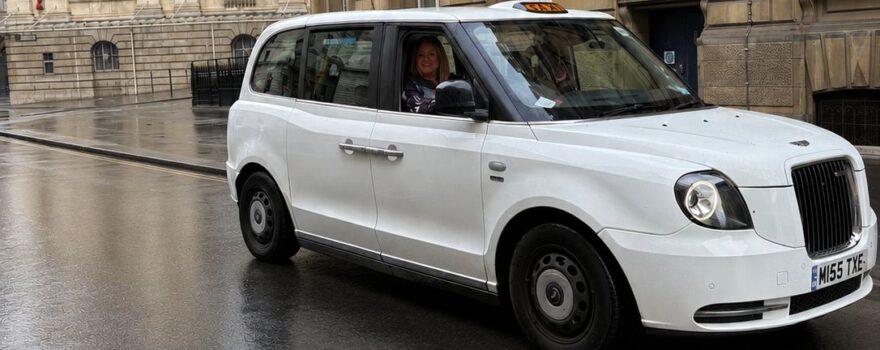
Ms Leigh Dargan, Master 2025/26 of the Worshipful Company of Hackney Carriage Drivers in her electric taxi cab
Those that live in, work in, or visit London will most probably be aware of the strict standards to which London taxi cabs have, since the mid 19th century, had to adhere. The annual “overhaul and inspection” which had been in place for many years whilst cabs in London were licensed by the Metropolitan Police Public Carriage Office, was superseded by an annual presentation for testing and ‘re-plating’, with a six-monthly ‘MOT’, when Transport for London (TfL) was created under the aegis of the new Greater London Authority in 2000.
As the size of Greater London’s diesel-engined taxi fleet diminishes as a consequence of a structured removal of old taxi cabs, the remaining fleet becomes increasingly ecologically friendly, due to the requirement that all new cabs are either fully electric or ‘hybrid’.
This month, TfL announced additional guidelines for licensed taxi owners and drivers regarding factors which effect the pollution-output of working cabs.
This gives welcome advice and supporting information, as to how cab drivers might reduce the pollutive output of their vehicles. Suggestions include driving smoothly, reducing idling engines, protecting your battery level at 20-80% as this protects battery health, keeping the vehicle well maintained with tyres in good condition and at the right pressure.
Steve Plumb: Past Master, The Worshipful Company of Hackney Carriage Drivers.