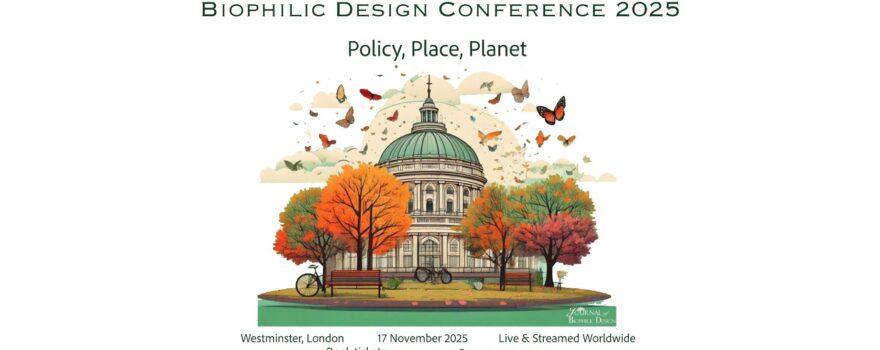
With accelerated urbanisation, climate urgency and shifting social priorities, there has never been a greater need to stimulate action to help us understand and create cities and places that become living systems which are healthier, more resilient and regenerative for people, nature and economy alike.
There needs to be more ‘connected’ thinking. Every decision we make in our built environment, every time we specify, we plan, design, build and manufacture, consideration should be taken into account whether it positively or negatively impacts the health and wellbeing of life, be that people or planet.
The Biophilic Hypothesis helps us make those decisions. The principles of Biophilic Design, basically help designers, architects, urban and community planners, manufacturers and practitioners, design and build better. Also, this is not just about relying on the landscape architects or designers to come up with the solutions, this is also about creating a positive community and stakeholder engagement eco system. If there is greater “buy in” at the beginning, for instance where communities and businesses are encouraged to have stewardship of a space, project outcomes are more successful.
Robert Gardner, CEO of Rebalance Earth, is aiming to create a world worth living in by mobilising £10 billion for Nature restoration, mitigating climate risks for businesses and communities, and delivering resilient, sustainable returns for investors. He sees we are in a tale of two futures, and that we desperately need a more nature-based economy. “Across Britain’s landscapes, water risk is cascading — too much, too little, too dirty — threatening homes, farms and prosperity. In the Evenlode catchment, a new biophilic mindset is turning this around. By restoring wetlands, re-wiggling rivers and regenerating soils, Nature becomes living infrastructure — protecting communities, improving food and water security, and enhancing wellbeing. This session explores how reconnecting design, ecology and economy through Nature-based solutions can create a resilient, prosperous future worth living in.”
There are many other action groups who are pulling together innovation and community. For instance, the Centre for Sustainable Healthcare (CSH) created the NHS Forest programme, which works to get more greenspaces into healthcare settings. They are helping nature transform healthcare across the UK – from woodlands to sensory gardens – for the benefit of staff, patients and the wider community.
On the other side, what often happens contractors switch out products for cheaper ones, for instance switching low VOC paint, or paint that actually cleans the air, with an off-the-shelf product from their supplier (did you know that research that suggests that conventional paints are our most significant source of plastics). Maybe these contractors act in innocence not realising the environmental impact their cost-cutting action will have, but each ‘bad’ decision kills something living along the way, whether that is wildlife or our own selves. At the Alliance for Sustainable Building Products, they focus on embodied carbon, which in the UK is still unregulated. But they also look at the wider implications of product ingredients and the impacts from the manufacturing processes. Maybe there needs to be greater economic and reputational consequences for life-destructive (non-biophilic) actions.
Standards and legal comebacks like the Living Building Challenge, WELL certification, Ecocide Law all go some way to addressing and providing guiding principles. But over and above all of this, is the “biophilia” hypothesis. We are nature, we are part of this living breathing planet. Our own lives depend on healthy living systems around us, from the water supply to the air we breathe. If we apply the Biophilia principle to every decision we make, we will see life regenerate. Maybe this overarching life and living system “biophilic” principle needs to be made a law. Maybe we need to start right at the root of the supply chain? The actual manufacturers? If they by law are NOT allowed to manufacture harmful goods, then those in the built environment cannot specify them…
Nature-connected design can drive innovation, unlock new markets and shape future policy. Biophilic Design is a catalyst for practical solutions, new collaborations, and a shared vision of cities where nature and people thrive together, for all our tomorrows. Our cities — and our planet — demand new thinking. We need healthier environments, stronger communities, equitable economies, and a future that supports both people and nature.
Just imagine if the principles of Biophilic Design became the foundation for how we live, build, govern and grow? Where biophilic cities and wildlife returns, air and water quality improves, mental and physical health is supported, and communities thrive. We can do this. Together.
Dr Vanessa Champion, founder and editor Journal of Biophilic Design, and The Biophilic Design Conference.
Join us at the Conference on 17th November 2025, Westminster London https://journalofbiophilicdesign.com/biophilic-design-conference
Together we can design a better world to live in, for people, for planet and for prosperity in every sense of the word…
References:
www.sustainablehealthcare.org.uk
https://journalofbiophilicdesign.com/biophilic-design-conference