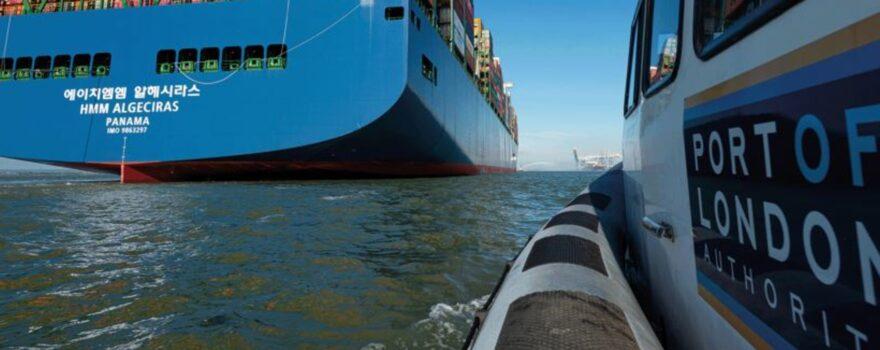
We had the great privilege of hearing from the Director of Sustainability for the Port of London Authority, Grace Rawnsley, at our online meeting on 10th September.
She kept us glued to her impressive slides and data as she updated us on the work of the PLA and how its Vision Zero is impacting all their work. Covering the River Thames from Teddington Lock to the Tidal Estuary, the PLA oversee the many uses of the River that might conflict and certainly pose challenges as to sustainability.
As the largest Port in the UK the commercial shipping has a great impact on the River but, when measured, the regular tugboats on the river are nearly as high emitters of carbon as the container vessels. Transitioning to cleaner fuels is a long term aim of the shipping industry and the River Thames has every shape of ship that will need to comply.
Thames Estuary 2100 Thames Estuary 2100 (TE2100) – GOV.UK is another key element of the work needed to protect the Thames Estuary from flooding and some excellent graphics and photos brought this home to us all. A timeline of works to the Thames Barrier and the many other interventions along the river showed some important and expensive milestones that will need to be met to keep London and the South East safe.
The physical work along the river to clear the “Wet Wipe Island” that had been created by poor human behaviour and waste management as well as the restoration of salt marshes were all impressive to see the biodiversity of the river being renewed and extended.
Our audience, including members of the Master Mariners’ Livery, asked some great questions about taking heat energy from the River or using tidal power as well as how to protect schools on the foreshore from the flood risk that is real.
An excellent extension of our knowledge and understanding.
You can see the entire presentation here on our YouTube Channel.
Alderman Alison Gowman
Founder and Chair of Livery Climate Action Group